Measure Yourself
Grab a tape measure - your numbers are the secret key to the whole women's section.
Why bother measuring?
Here’s a secret every woman eventually learns: women’s sizes are a mess. A size 12 in one shop is a 10 in another and a 14 in a third. Sizes also change between countries, and brands quietly shrink or grow their numbers over the years (“vanity sizing”). So the number on the label is a rough guess, not a fact about you.
Your measurements, on the other hand, don’t lie. Once you know them, you can read any brand’s size chart (online or in store) and pick the right size first time. That means fewer returns, less change-room despair, and far less money wasted.
What you’ll need
- A soft tape measure (the bendy sewing kind, just a few dollars or pounds at craft stores, discount department stores, sewing shops or any supermarket sewing aisle). No tape? Use a piece of string or ribbon, mark it with a pen, then lay it against a ruler or metal tape.
- A mirror, so you can check the tape is level at the back.
- Thin, fitted clothes or just your underwear. Bulky jumpers add centimetres.
- Optional: a friend you trust. Not required!
The measurements that matter
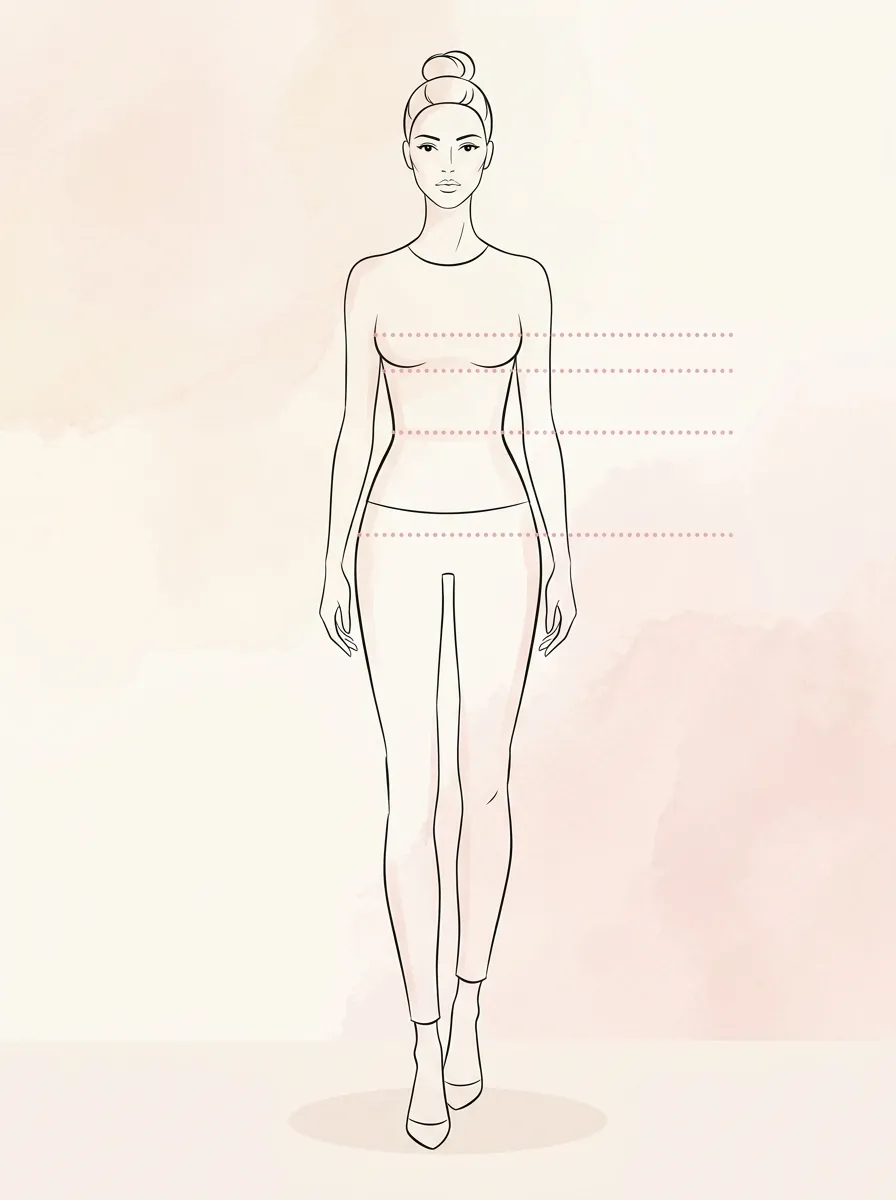
Stand relaxed, feet together, breathing normally. Keep the tape snug but not digging in - you should be able to slide a finger underneath. Keep it parallel to the floor all the way round.
| Measurement | Where the tape goes | Used for |
|---|---|---|
| Bust | Around the fullest part of your chest (over a non-padded bra or bare) | Tops, dresses, jackets |
| Underbust | Snugly around your ribcage, right under your chest | Bra band size |
| Waist | Your natural waist - the narrowest part of your torso, usually just above your belly button. Bend sideways; the crease that forms is your waist. | Dresses, skirts, high-waisted pants |
| Hips | Around the fullest part of your bottom and hips, feet together | Pants, skirts, dresses |
| Shoulders | Across your back from the bony tip of one shoulder to the other | Jackets, blazers, structured tops |
| Inseam | Inside of your leg from the crotch seam down to where you want pants to end (easiest measured on a pair of pants that fit well) | Pant length |
| Foot length | Stand on paper, mark heel and longest toe, measure the gap (do it in the evening when feet are biggest) | Shoes |
Tips that make a real difference
- Measure twice. Do each one two or three times and use the average.
- Don’t suck in. You want the size that fits the body you’ll actually be wearing clothes in, not the one holding its breath.
- Note the date. Bodies change with weight, exercise, age and (if it’s part of your journey) hormones. Re-measure every few months or when things start fitting differently.
- Centimetres or inches? Australia, the UK and Europe mostly use centimetres; the US uses inches. Write down both (1 inch = 2.54 cm) and you’ll be ready for any size chart.
Broad shoulders, long legs, big feet? Welcome to the club
Lots of women are tall, broad-shouldered, long-limbed, or have larger hands and feet. It’s completely normal, and there’s a whole world of clothing for it: tall ranges (ASOS Tall, Long Tall Sally, department-store tall lines, and Uniqlo’s online extended lengths), extended shoe sizes (Long Tall Sally, ASOS, specialist online retailers, and sneaker brands’ unisex sizing, which is naturally longer and a touch wider), and stretchy fabrics that forgive wide shoulders.
Your measurements will often be different sizes in different places - say a 14 on top and a 10 on the bottom. That’s not a problem to fix; it’s just useful information. You’ll learn tricks like buying separates, or choosing dresses sized for your largest measurement and having the rest taken in.
Next up
With your numbers in hand, you’ll learn to translate them between AU, UK, US and EU sizes, and spot when something truly fits.