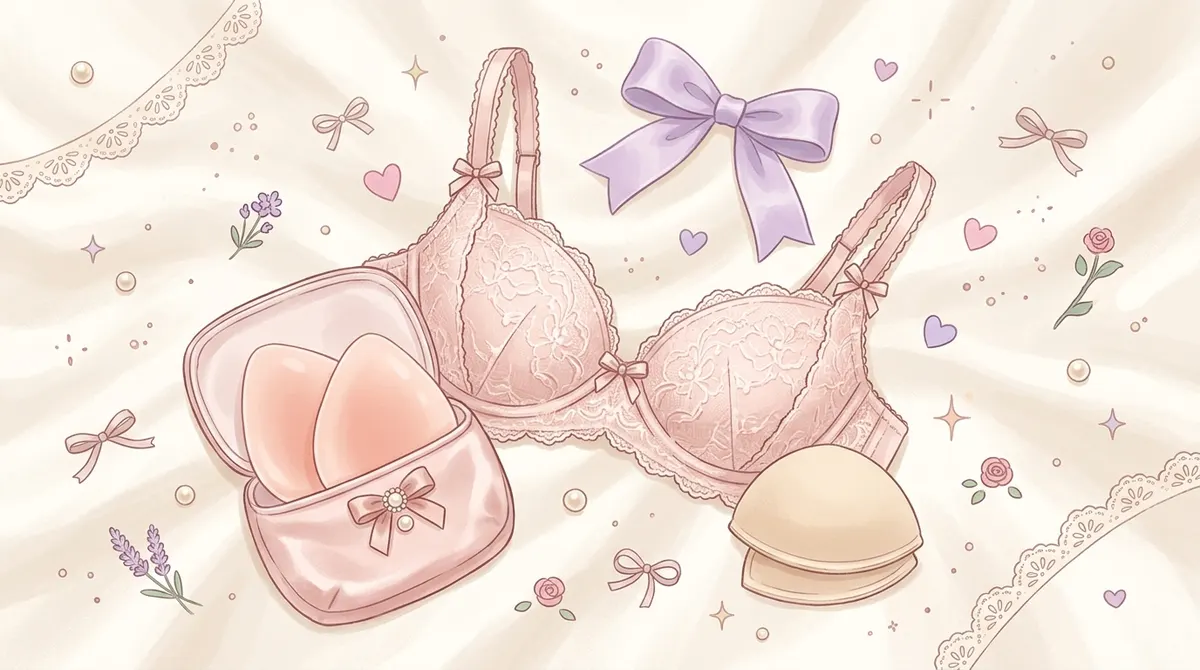
Breast Forms & Padding
Pads, inserts, forms and pocketed bras - how to add shape that looks natural and feels comfortable.
📖 Read⏱️ 10 min🌸 15 petals🏳️⚧️ Trans-specific
Why add shape?
Some women like a fuller silhouette in certain outfits; some are early in breast development; some find it eases dysphoria; some just enjoy playing with their shape - the same way a push-up bra exists for everyone. Adding shape is optional and adjustable: you can go bigger for a night out and wear nothing extra at the gym.
The options, from simplest to fanciest
| Option | What it is | Approx. cost | Good to know |
|---|---|---|---|
| Padded or push-up bra | Built-in foam | $10–50 / £8–40 | Easiest start. No extra bits. |
| Bra inserts (“cookies”) | Thin foam or gel pads slipped into a bra | $5–25 / £4–20 | Cheap, light, cool in summer. Readily available in lingerie sections, department stores and online. |
| Foam or fibre-fill forms | Lightweight full forms | $20–60 | Light and breathable, but don’t move or feel like tissue. |
| Silicone forms | Weighted, soft, realistic forms | $50–300+ | Most natural movement and drape. Heavier and warmer. |
| Adhesive silicone forms | Silicone with a sticky back | $100–400+ | Can be worn with some low-backed or strapless outfits. Needs care and skin prep. |
Choosing a size that looks natural
- Start with your band. Measure your underbust as usual and get the right band size first.
- Go modest. One to two cup sizes in proportion to your frame looks most natural and is lighter to carry. For many people that’s roughly a B or C cup in their band size.
- Form sizes aren’t cup letters. Silicone forms are often sized by number or weight. Each brand has a chart matching form size to bra size - use it.
- Shape matters. Teardrop and asymmetric forms sit naturally in most bras; triangle forms suit plunge bras; round forms suit balconettes.
Wearing them
- Pocketed bras have an inner pocket that holds forms or inserts securely. Mastectomy bras, many sports bras and some regular bras have them. No pockets? A snug, full-coverage bra still works, or a sewist can add pockets.
- Position: forms sit slightly to the sides, not dead centre. Nipple points face slightly outward.
- Necklines: high and medium necklines are easiest. Deep plunges and low armholes can reveal edges - a little practice in the mirror tells you what works.
- Heat: silicone gets warm. In an Aussie summer, foam inserts or a padded bralette may be more comfortable.
Caring for your forms
- Wash silicone forms with mild soap and lukewarm water, pat dry and store them in their original shell or a shaped box.
- Keep them away from pins, brooches, sharp nails and pets - silicone can puncture.
- A soft fabric cover can make them more comfortable against skin.
- Well looked-after silicone forms can last for years.
The bigger picture
Breast forms are a tool, not a requirement. Some people wear them every day for years; some for a while; some never. However you approach it, the most important fit is the one that feels like you.
💝 Keep exploring
- 🎬How to measure for a bra (with and without breastforms); Vera Wylde ↗youtube.com · Measuring and choosing a bra size when you're wearing forms.
- 🎬How to choose your cup size with breast forms; The Breast Form Store ↗youtube.com · Short explainer on how form sizes relate to cup sizes.
- 📖Breast prostheses; Wikipedia ↗en.wikipedia.org · Background on forms (they're also widely used after mastectomy, so mastectomy suppliers are a great source).
- 💞Point of Pride - free femme shapewear program ↗pointofpride.org · A charity program that has provided free breast forms to trans people in need (check current eligibility).