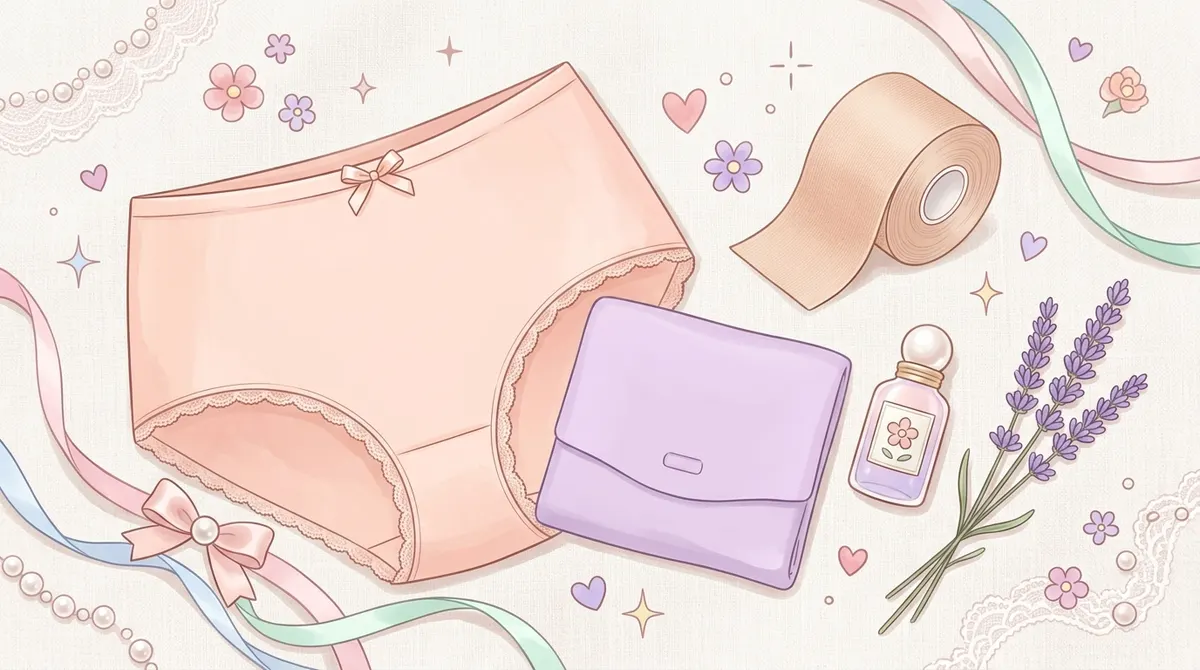
Tucking & Gaffs
A frank, practical, safety-first guide to tucking - methods, gaffs, comfort and clothing tips.
💛 Gentle heads-up: Frank, practical discussion of genitals and underwear.
What tucking is (and isn’t)
Tucking means arranging your genitals so the front of your underwear, swimwear or tight clothing looks smooth and flat. People tuck for lots of reasons: to wear leggings, bodycon dresses or swimsuits confidently, to ease dysphoria, or just because it feels right.
It’s completely optional. Many women never tuck, some only tuck for particular outfits, and some prefer clothing that simply doesn’t need it. All valid.
Three common approaches
Start with the gentlest one that gives you the look you want.
1. Compression only (easiest)
Snug underwear does most of the work. Bring everything down and back, then pull up a pair of firm briefs, a gaff, or shapewear shorts. Many people find this is all they need under skirts, A-line dresses and looser pants.
2. The classic tuck
- Wash your hands and get comfy. Many people find it easier sitting or lying down, and when relaxed and warm (after a shower is good).
- Testicles up: the testicles can be gently guided up into the inguinal canals - two small openings in the lower abdomen, just above where each testicle sits, which they originally descended through. Use your fingertips and go slowly. It may feel strange at first; it should never be sharp or painful.
- Penis back: gently draw the penis back between your legs, towards your bottom. The now-empty scrotal skin can wrap around it.
- Hold it: pull up a gaff or snug underwear to keep everything in place. Some people layer two pairs.
It’s fine to skip the “testicles up” step - tucking them back alongside the penis works for lots of people.
3. Tape tucking
Some people use tape to hold things in place, especially for swimwear or very tight outfits.
- Use only skin-safe medical or kinesiology tape (from a chemist, or tape sold specifically for tucking). Never use duct tape, packing tape or sticky tape.
- Tape only on hair-free skin - removing tape from hair is painful and can tear skin.
- Patch-test first on another bit of skin for 24 hours.
- To remove, go slowly and use oil (baby oil, coconut oil) or a medical adhesive remover.
Gaffs: your new best friend
A gaff is a tight, smooth undergarment designed for tucking - usually a stretchy panel or high-waisted brief with firm compression at the front. They’re far more comfortable than wearing two pairs of regular underwear.
- Where to get them: specialist makers (Origami Customs and others), trans-owned Etsy shops, and drag and costume shops. Point of Pride runs a free program for those who can’t afford them.
- Budget DIY: cut the legs off a pair of firm, opaque tights or control-top pantyhose to make a stretchy band. Hem the cut edge with a little fray-stop or leave it - tights rarely unravel much.
- Look for a breathable cotton gusset, a smooth (seam-free) front, and the right size. Too tight isn’t better.
Safety: the important bits
Tucking is commonly done and generally fine when you listen to your body. These habits keep it that way:
- It shouldn’t hurt. Discomfort, sharp pain, numbness, tingling or a cold feeling means untuck right away.
- Take breaks. Give your body time untucked every day. Avoid tucking while you sleep.
- Don’t skip water to avoid bathroom trips. Plan your loo breaks instead - you’ll usually need to untuck to pee, and that’s okay (most people re-tuck in a cubicle in under a minute with practice).
- Watch your skin. Keep things clean and dry; change out of sweaty gaffs; use a gentle barrier cream if you chafe.
- Hernias, fertility, or upcoming surgery? Have a chat with your GP or care team first. Little research exists on long-term tucking and fertility, so if having biological children someday matters to you, that conversation is worth having.
Clothing that makes it easier
Good news: lots of clothes give a smooth line with little or no tucking.
- A-line skirts and skater dresses that flare from the waist.
- High-waisted bottoms with a flat front panel.
- Longer tops, tunics and shirt-dresses that sit over the hips.
- Darker colours, prints and thicker fabrics (ponte, denim, twill) rather than thin jersey.
- Swimwear: skirted one-pieces, high-waisted bikini bottoms, boy-short styles, or a sarong over the top.
💝 Keep exploring
- 📖Tucking; Wikipedia ↗en.wikipedia.org · An overview of tucking methods and what's known about safety.
- 🎬How To Tuck For Trans MTF; Chloe Alice ↗youtube.com · A clear, calm walkthrough from a trans woman.
- 🎬How to Tuck With TomboyX | Trans 101: Rose Montoya ↗youtube.com · A friendly demo of tucking with purpose-made underwear.
- 🛍️Origami Customs ↗origamicustoms.com · Queer-run maker of gaffs, tucking underwear and swimwear in a huge range of sizes.
- 💞Point of Pride - free femme shapewear program ↗pointofpride.org · A charity that has provided free gaffs and breast forms to trans people who can't afford them (check current eligibility).