Shapes, Lines & Proportions
Hourglass, pear, inverted triangle… body shapes are just a toolkit. Learn the visual tricks stylists use.
First: there’s no “wrong” shape
Every body shape is a good body shape. “Flattering” just means using lines and proportions on purpose to create the look you want. Sometimes that’s balance. Sometimes it’s drama. Sometimes it’s comfort, full stop. You’re the art director here.
The five classic shapes
Using your measurements from Measure Yourself, compare your shoulders/bust, waist and hips:
| Shape | Roughly… | Lovely options to try |
|---|---|---|
| Inverted triangle | Shoulders or bust wider than hips | V and scoop necklines, raglan sleeves, A-line and full skirts, wide-leg and flared pants, detail at the hips |
| Rectangle | Shoulders, waist and hips fairly similar | Belts, peplums, wrap styles, high-waisted bottoms, or lean into straight sleek lines |
| Pear / triangle | Hips wider than shoulders | Boat necks, puff or structured sleeves, statement tops, A-line skirts, straight or bootcut jeans |
| Hourglass | Shoulders and hips similar, waist clearly smaller | Wrap dresses, belted styles, fitted-and-flared, stretch fabrics |
| Apple / round | Fuller through the middle | Empire waists, V-necks, flowy tops, open cardigans, straight or wide-leg trousers |
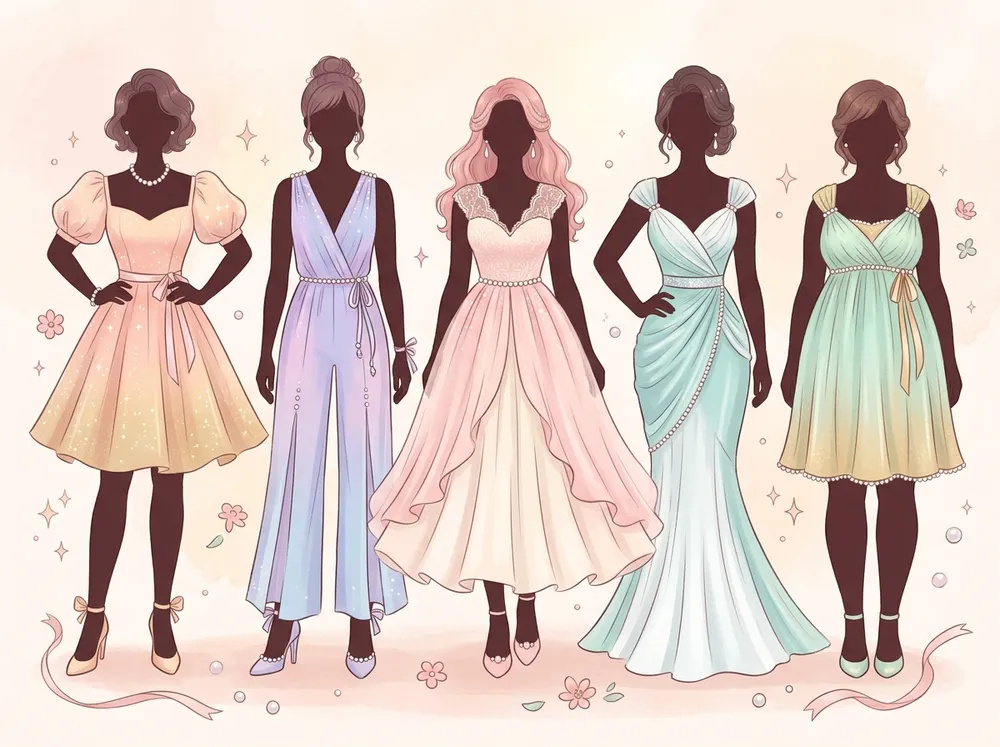
Most of us are somewhere in between, and shape changes over time (hormones, age, exercise). Use whatever’s useful and ignore the rest.
Broad shoulders? Gorgeous.
Broad shoulders are common - swimmers, athletes, tall women and many trans women have them, and models are often chosen for them. If you’d like to soften or balance them (totally optional):
- Necklines: V-necks, scoops and sweethearts draw the eye down and in. Halter necks highlight the collarbones beautifully. Boat necks and wide square necks emphasise width.
- Sleeves: raglan, dolman and kimono sleeves have no seam on the shoulder edge, so they blur the line. Skip big shoulder pads and puffs if you want less width.
- Bottoms: add volume below; A-line, pleated or full skirts, wide-leg or flared trousers, prints and lighter colours on the bottom half.
- Straps: thicker straps that sit closer to the neck look more balanced than thin spaghetti straps out at the shoulder edge.
Or - embrace them. A strong-shouldered blazer or a one-shoulder top on a broad frame is pure power.
Tall, petite and everything between
- Tall: you can carry long maxi skirts, wide-leg trousers, big prints and oversized coats beautifully. Dedicated tall ranges (ASOS Tall, Long Tall Sally, Gap/Old Navy Tall, and major department stores’ extended lengths) save you from short sleeves and ankle-skimming pants. Heels are optional - never a “too tall” thing.
- Petite: cropped jackets, high waists and monochrome outfits lengthen. Petite ranges fix sleeve and hem length.
Stylists’ tricks (they work on everyone)
- The rule of thirds. Outfits split into roughly one-third / two-thirds look more pleasing than a 50/50 split. A tucked-in top with high-waisted trousers does exactly this.
- Vertical lines lengthen. Long necklaces, open cardigans, front seams and V-necks pull the eye up and down.
- Monochrome = long and sleek. One colour (or shades of it) head to toe creates a smooth column.
- Light and bright brings forward; dark recedes. Put lighter colours, shine and prints where you want attention.
- Define the waist (with a belt, a wrap, or a tuck) to create curves on a straighter frame.
- Hem at a narrow point. Skirts and cropped pants look best ending at a slim part of the leg: just above or below the knee, mid-calf, or the ankle.
💝 Keep exploring
- 🎬How to determine your body type | How to take your measurements; Justine Leconte ↗youtube.com · How to work out your shape from your measurements.
- 🎬How to style an inverted triangle body (V-shaped body); Justine Leconte ↗youtube.com · Brilliant if you have broad shoulders.
- 🎬How to style a pear shaped body; Justine Leconte ↗youtube.com
- 🎬How to style an apple shaped body; Justine Leconte ↗youtube.com
- 🎬How to find the perfect jeans for your body type; Justine Leconte ↗youtube.com