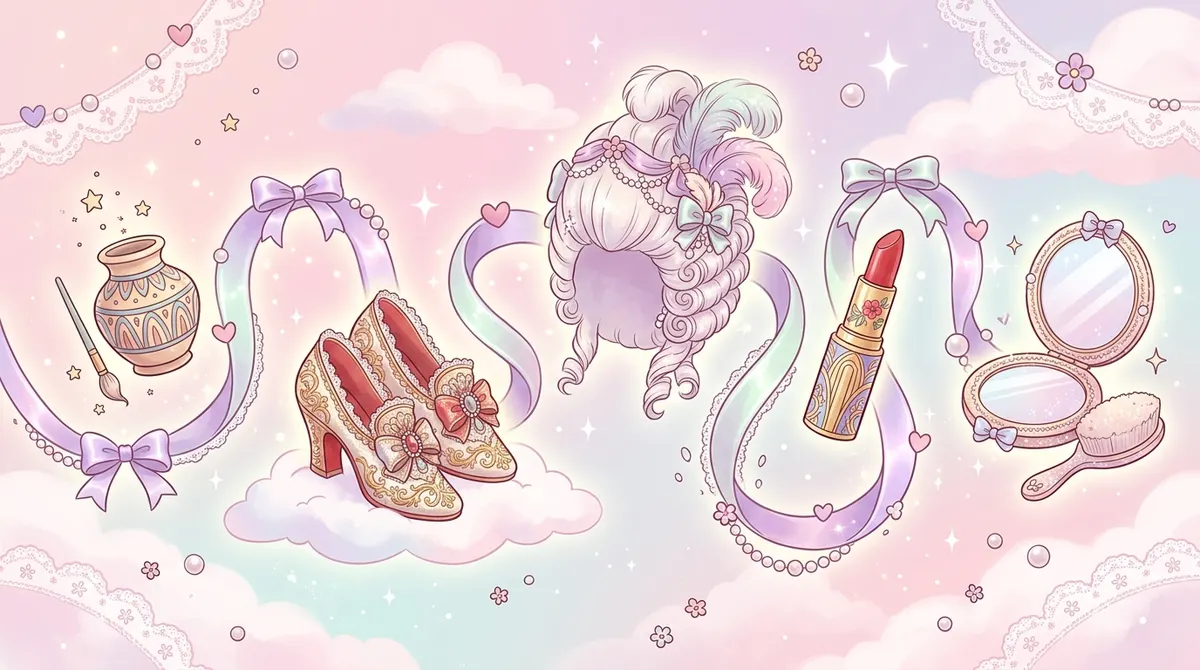
Pink Was for Boys
The surprising history of pink, heels and makeup, and why the "rules" keep changing.
The colour that changed teams
Today pink feels like the girly colour. But it hasn’t always been.
For centuries, babies of every sex were dressed in white. White cotton could be bleached and boiled clean, which mattered a lot before washing machines. Little boys and girls alike wore dresses until they were around six.
When pastel nursery colours caught on in the early 1900s, nobody could agree which colour went with which sex. In 1918, a trade magazine for baby clothes declared:
“The generally accepted rule is pink for the boys, and blue for the girls. The reason is that pink, being a more decided and stronger color, is more suitable for the boy, while blue, which is more delicate and dainty, is prettier for the girl.”
Other sources said the opposite. Historian Jo Paoletti, who has studied this for decades, found that “pink for girls” only really settled in America around the 1940s and 50s. Marketing did a lot of the work, along with celebrities like First Lady Mamie Eisenhower, who wore so much pink in the 1950s that a shade got her name.
Heels: a borrowed shoe
High heels were originally practical riding shoes. A heel helps keep your foot in a stirrup, and Persian cavalry used them for exactly that. In the 1600s, European aristocrats adopted heels as a status symbol. King Louis XIV of France loved red-heeled shoes so much that he restricted who at court could wear them.
Women borrowed the fashion too, and over the 1700s heels gradually became seen as feminine and impractical, which is how we think of them now.
Makeup: in, out and in again
- Ancient Egypt: people of all sexes wore dark kohl around the eyes, partly for beauty and partly to cut down on sun glare.
- Tudor England: Queen Elizabeth I made pale skin fashionable with a white face paint called ceruse, made with lead. (Very toxic. Please don’t.)
- Victorian Britain: visible makeup was seen as vulgar, something actresses wore. Respectable women were supposed to look “naturally” rosy, so they pinched their cheeks and bit their lips in secret.
- Early 1900s: film and modern advertising changed everything. Lipstick in a handy metal tube appeared in the 1910s, and Max Factor, a makeup artist for Hollywood films, helped make the word “make-up” an everyday one.
- 1912: suffragettes marched in New York wearing bold red lipstick, reportedly handed out by beauty entrepreneur Elizabeth Arden. Red lips became a symbol of independence.
- World War II: lipstick was promoted as a morale booster, a little act of defiance and normality in hard times.
So what does this mean for you?
It means no item, colour or habit is “naturally” feminine. Femininity is a shared language that people keep rewriting. You don’t have to earn it or prove it. You get to speak it your way.
Love pink? It’s yours. Can’t stand pink? Also completely feminine. Heels, flats, a full face or bare skin: history shows they’ve all taken turns being “the right way to be a woman”, which means none of them is the only way.